


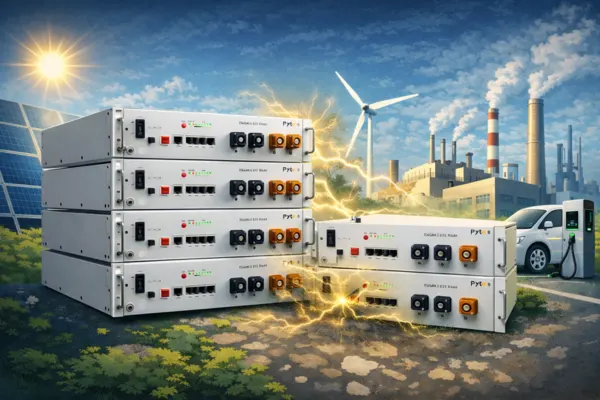
In recent years, one technology has been steadily gaining ground in industrial applications — LiFePO4 batteries (lithium iron phosphate).
While lithium-ion systems dominate consumer electronics, LiFePO4 batteries are establishing themselves as a preferred solution for industry, energy systems, and transportation.
What makes them so sought-after, and why are more and more companies choosing them as a long-term investment?
What Is LiFePO4 Technology?
LiFePO4 is a type of lithium-ion battery in which the cathode material is lithium iron phosphate. This chemistry provides greater thermal stability, higher safety, and exceptional cycle durability.
Although its energy density per kilogram is slightly lower than that of standard Li-Ion cells, its advantages under industrial load conditions are significantly more important.
Higher Safety
One of the main reasons for the popularity of LiFePO4 batteries is their stability. They are much more resistant to overheating and significantly less prone to thermal runaway compared to other lithium technologies.
This makes them a preferred choice in environments where safety is critical – industrial facilities, warehouses, autonomous energy systems, electric vehicles, and solar installations.
Exceptional Cycle Life
LiFePO4 batteries can withstand between 3,000 and 6,000 charge and discharge cycles – and with proper use, even more. This is several times higher than standard lithium-ion batteries.
In industrial environments, where batteries are used daily and intensively, long cycle life means lower long-term costs and fewer interruptions for replacement.
Stability Under Harsh Conditions
Industrial applications often require operation at high temperatures, under heavy loads, and in continuous duty cycles. LiFePO4 technology offers:
- stable voltage during discharge;
- resistance to higher operating temperatures;
- lower risk of degradation under intensive use.
This makes it suitable for solar systems, UPS solutions, forklifts, autonomous stations, and industrial equipment.
Lower Total Cost Over Time
Although the initial investment in LiFePO4 batteries may be higher, their durability and efficiency reduce the total cost of ownership.
Longer lifespan, reduced maintenance needs, and less frequent replacement offset the upfront costs. In industry, this translates into less downtime and better return on investment.
Ideal for Solar and Hybrid Systems
LiFePO4 batteries are becoming the preferred choice for photovoltaic installations and energy storage systems. Their stability and ability to withstand deep cycles make them ideal for daily charging and discharging.
Combined with a quality controller and management system, they ensure reliable solar energy storage and stable system performance.
Environmental Aspect
LiFePO4 batteries do not contain cobalt or other more problematic materials used in some lithium technologies. This makes them safer both in operation and during recycling.
With increasing regulations and sustainability requirements, industry is increasingly selecting technologies with a lower environmental footprint.
At EUROGROUP-33 we observe growing interest in LiFePO4 solutions within the industrial sector. Our approach is to provide battery systems that combine safety, long lifespan, and stable performance under real-world conditions.
We design and integrate solutions tailored to each client’s specific requirements — whether for solar systems, mobile applications, or industrial capacities.
LiFePO4 batteries are not just a new trend – they represent a logical evolution in industrial energy storage. With higher safety, longer lifespan, and stable performance under load, they meet the real needs of modern business.
Industry seeks reliability and predictability. LiFePO4 delivers exactly that – energy you can rely on.
Because of their combination of high safety, long service life, and low maintenance costs. They provide reliable performance under intensive operating conditions and offer a better return on investment over the long term
LiFePO4 batteries can withstand several times more charge and discharge cycles than standard lithium-ion and lead-acid batteries, making them a preferred choice for applications with daily use.
Yes. Thanks to their high cycle life and stability during deep discharge cycles, they are among the best solutions for storing energy generated by solar installations.
Yes. They are significantly more resistant to overheating and have a much lower risk of thermal instability compared to other lithium technologies, making them ideal for industrial and energy storage applications.
In most cases, yes. Their longer lifespan, lower maintenance requirements, and less frequent replacement often result in lower total ownership costs throughout the entire operational life of the system.