


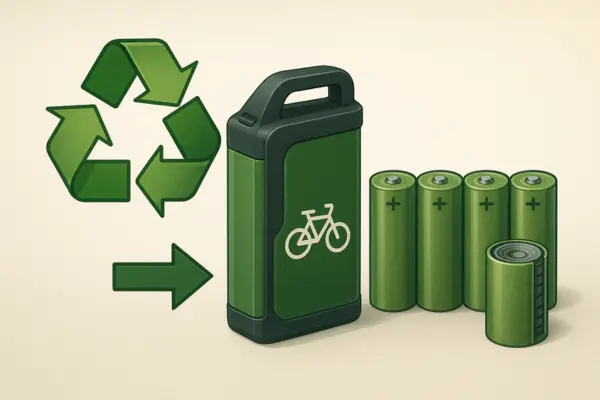
Electric bicycles have become a symbol of modern urban transport – convenient, economical, and environmentally friendly. But like any technology, they also have a “lifespan.” After several years of use, the moment comes when the battery needs to be replaced.
And then an important question arises:
What should we do with an old e-bike battery?
Throwing it into regular household waste is dangerous and prohibited. Instead, proper recycling allows us to protect nature and return valuable materials back into the production cycle. proper recycling allows us to protect nature and return valuable materials back into the production cycle.
Why Is Recycling E-Bike Batteries Important?
E-bike batteries contain lithium, nickel, manganese, and cobalt – resources that are both valuable and potentially dangerous if released into the environment.
Recycling:
- Reduces waste and soil and water pollution;
- Allows reuse of up to 95% of the materials;
- Reduces the need for mining new raw materials;
- Supports the circular economy and sustainable transport.
Most importantly, it prevents the risk of fires and toxic emissions that can occur when lithium batteries are disposed of improperly.
Where Can We Hand In an E-Bike Battery for Recycling?
- At the manufacturer or retailer
Most responsible e-bike manufacturers and distributors have partner programs for returning and recycling old batteries.This is the safest and most recommended option.
- At specialized battery collection points
In many cities, there are designated containers for accumulators and lithium batteries — located in shopping centers, service workshops, or electronic waste collection facilities. - Through the EUROGROUP-33 Service Center
Our service center accepts old batteries for environmentally responsible disposal and recycling, ensuring their safe handling and processing.
How to Prepare the Battery Before Handing It In?
- Do not disassemble it yourself – lithium cells can ignite if handled improperly.
- Insulate the terminals with tape to prevent contact between poles.
- If the battery is damaged, swollen, or overheated — do not recharge it and store it in a non-flammable container until handover.
- Deliver it only to authorized collection points or service centers.
What Happens After Recycling?
Once an e-bike battery is handed in, it goes through several stages:
- Disassembly and separation of components;
- Extraction of lithium, nickel, and cobalt through hydrometallurgical processes;
- Purification and reuse of materials for new batteries.
In this way, waste becomes a resource – and nature becomes the winner.
What We Do at EUROGROUP-33?
At EUROGROUP-33, we see batteries as part of a larger ecosystem — one in which energy is used responsibly and circularly.
Our goal is simple – less waste, more energy, and a clear conscience.
Recycling e-bike batteries is a small but extremely important step toward a greener future.
Every electric bicycle is part of the solution — but only if we complete the cycle responsibly by returning the battery for recycling.
At EUROGROUP-33, we believe sustainable transport does not end with movement — it continues even after the last charge.
Let’s give new life to the energy that moves us.
Ако батерията е повредена, подута или прегрявала, тя може да представлява риск от запалване. Добре е да я съхранявате на сухо място, далеч от запалими материали, и да я предадете възможно най-скоро в оторизиран пункт.
No. Disassembling lithium batteries is dangerous and may lead to a short circuit or fire. The battery should be handed over intact.
All lithium-ion batteries for electric bicycles are recyclable, regardless of whether they are functioning or damaged. Even heavily worn batteries contain valuable materials that can be recovered.
Modern technologies allow recovery of up to approximately 90–95% of the main materials, including lithium, nickel, cobalt, and copper, which can be reused in the production of new batteries.